
May 15 2026
/
Heavy-Duty Aluminium Panels: Meeting the Structural Demands of High-Rise Construction
Introduction: The Structural Evolution of High-Rise Construction
Urban skylines are rising faster than ever. Across India, the Middle East, Southeast Asia, Europe, and North America, high-rise residential towers, commercial complexes, smart city infrastructure, and mixed-use developments are redefining modern construction. As buildings grow taller and architectural designs become more ambitious, structural systems must evolve to meet increased load demands, safety regulations, and accelerated project timelines.
In this transformation, heavy-duty aluminium panels are emerging as a critical solution for high-rise construction. These panels offer a unique combination of strength, durability, lightweight performance, corrosion resistance, and reusability. When engineered correctly, they enhance structural efficiency while reducing installation complexity.
At the center of this advancement are manufacturers like National Industries, equipped with advanced extrusion technology, including India’s largest 86 MN extrusion press, capable of producing wide and structurally reinforced aluminium profiles. These capabilities enable the production of heavy-duty aluminium panels designed to withstand the demanding structural requirements of high-rise projects.
Explore advanced aluminium extrusion and panel solutions at
www.nationalindustries.world
This comprehensive guide explores how heavy-duty aluminium panels are transforming high-rise construction, supported by innovation in extrusion technology, die manufacturing, automation, and structural engineering.
Why High-Rise Construction Demands Advanced Structural Materials
Increasing Height, Increasing Load
As building heights increase, structural loads multiply. These loads include:
- Dead load from building materials
- Live load from occupants and usage
- Wind pressure at higher elevations
- Seismic forces in earthquake-prone zones
- Thermal expansion and contraction
Traditional materials like steel and reinforced concrete remain central to structural frameworks, but secondary structural systems and panel solutions increasingly rely on aluminium extrusion for improved efficiency.
Speed of Construction Is Critical
High-rise construction projects operate under tight deadlines. Delays result in:
- Increased financing costs
- Higher labor expenses
- Missed occupancy timelines
- Reduced profitability
Heavy-duty aluminium panels support faster assembly, modular construction methods, and improved site productivity.
What Are Heavy-Duty Aluminium Panels?
Heavy-duty aluminium panels are engineered structural sections designed for high load-bearing capacity, stability, and long-term durability. These panels are manufactured using precision aluminium extrusion processes and reinforced structural design techniques.
They are commonly used in:
- Aluminium formwork systems
- Façade and curtain wall frameworks
- Structural decking
- Balcony support panels
- Elevator shaft linings
- Modular construction components
When produced using advanced extrusion presses and high-precision dies, these panels provide superior strength-to-weight performance.
The Role of Aluminium Extrusion in Heavy-Duty Panel Manufacturing
Strength Through Design
Aluminium extrusion enables the creation of complex cross-sections with integrated reinforcement ribs, hollow cavities, and thick-walled structures.
These design features enhance:
- Load distribution
- Bending resistance
- Torsional strength
- Impact resistance
High-capacity extrusion presses allow the production of wide and structurally robust panels required for high-rise construction applications.
National Industries’ 86 MN extrusion press supports manufacturing of wide aluminium profiles up to 600 mm, enabling structurally integrated panel systems for demanding projects.
Structural Advantages of Heavy-Duty Aluminium Panels
High Strength-to-Weight Ratio
Aluminium offers exceptional strength relative to its weight. This provides:
- Reduced structural load on foundation
- Easier handling during installation
- Lower transportation costs
- Improved seismic performance
For high-rise buildings, weight reduction directly improves overall structural efficiency.
Corrosion Resistance
Unlike steel, aluminium forms a natural oxide layer that protects against corrosion.
In coastal cities and humid environments, this property enhances:
- Structural longevity
- Reduced maintenance cost
- Improved safety
Heavy-duty aluminium panels maintain performance in harsh environmental conditions.
Reusability and Sustainability
Aluminium panels used in formwork systems can be reused multiple times.
This supports:
- Reduced material waste
- Lower lifecycle cost
- Sustainable construction practices
- ESG compliance
Aluminium’s recyclability further strengthens environmental performance.
Heavy-Duty Aluminium Panels in Aluminium Formwork Systems
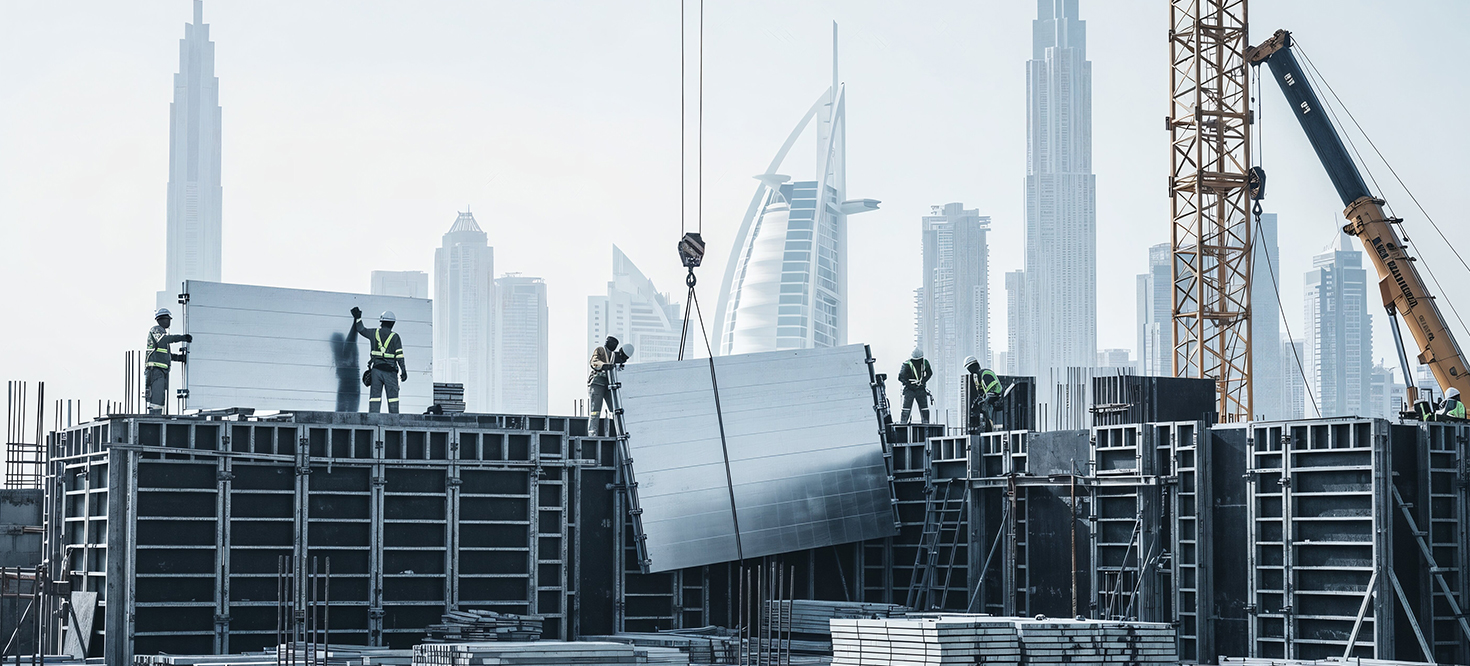
One of the most impactful applications of heavy-duty aluminium panels is in aluminium formwork systems.
Why Formwork Strength Matters
High-rise buildings require repetitive casting cycles. Formwork panels must:
- Withstand concrete pressure
- Maintain dimensional accuracy
- Resist deformation
- Support rapid assembly and dismantling
Heavy-duty aluminium panels engineered with reinforced ribs and wide profile structures provide long service life and structural reliability.
Wide Profile Panels for High Load Capacity
Modern high-rise construction increasingly uses wide aluminium profiles for:
- Slab formwork
- Beam support
- Column casting systems
Wider profiles reduce joints and increase structural integrity.
National Industries’ advanced extrusion capabilities support wide-profile manufacturing aligned with high-rise structural requirements.
Role of High-Capacity Extrusion Presses
Why 86 MN Press Technology Matters
Heavy-duty panels require thick cross-sections and complex structural geometries.
An 86 MN extrusion press delivers:
- High extrusion force
- Balanced metal flow
- Uniform wall thickness
- Reduced internal stress
This ensures structural stability even for large and reinforced panel designs.
Precision Under Pressure
High-capacity presses must maintain dimensional accuracy at scale.
Advanced press systems incorporate:
- Automated die alignment
- Real-time pressure monitoring
- Temperature optimization
- Predictive maintenance systems
These technologies ensure consistent structural quality across production batches.
Advanced Die Engineering for Structural Panels
Heavy-duty aluminium panels require high-precision dies to ensure:
- Balanced metal flow
- Reinforced rib formation
- Dimensional consistency
- Surface quality
AI-driven simulation tools predict metal behavior during extrusion, reducing correction cycles and ensuring first-pass success.
Integrated die manufacturing strengthens production control and reduces project delays.
Structural Testing and Quality Assurance
Heavy-duty aluminium panels undergo rigorous testing to ensure compliance with structural standards.
Testing procedures include:
- Tensile strength analysis
- Load-bearing capacity evaluation
- Fatigue resistance testing
- Dimensional tolerance inspection
- Surface integrity verification
Digital quality monitoring systems enhance traceability and compliance.
National Industries’ quality-focused manufacturing philosophy ensures reliability across infrastructure projects.
High-Rise Façade Systems and Aluminium Panels
Modern skyscrapers require façade systems that are:
- Lightweight
- Structurally stable
- Weather resistant
- Aesthetically adaptable
Heavy-duty aluminium panels support curtain wall frameworks and façade substructures with improved durability and reduced maintenance.
Seismic and Wind Load Considerations
Tall buildings experience significant wind pressure and potential seismic activity.
Aluminium panels engineered with:
- Reinforced hollow sections
- Balanced weight distribution
- Structural stiffness
enhance resilience against dynamic loads.
Lightweight aluminium components reduce inertia forces during earthquakes, improving safety.
Sustainability in High-Rise Construction
Sustainable construction is no longer optional. Heavy-duty aluminium panels support green building initiatives through:
- Recyclability
- Energy-efficient manufacturing
- Reduced transportation emissions
- Lower material wastage
Smart extrusion systems reduce scrap and optimize energy consumption.
National Industries aligns with responsible manufacturing practices to support sustainable urban development.
Integration with Modular Construction Trends
Modular construction is gaining momentum globally.
Prefabricated aluminium panel systems enable:
- Faster site assembly
- Reduced labor dependency
- Improved structural precision
- Minimal on-site waste
Heavy-duty aluminium panels manufactured with advanced extrusion technology support scalable modular building solutions.
Cost Efficiency and Lifecycle Benefits
Although aluminium panels may involve higher initial material cost compared to some alternatives, long-term benefits include:
- Reduced maintenance
- High reuse cycles
- Faster installation
- Lower structural load
- Improved durability
Total lifecycle cost is often significantly lower.
Global Market Trends Driving Demand
Key trends supporting heavy-duty aluminium panel growth include:
- Rapid urbanization
- Smart city development
- Affordable housing initiatives
- Commercial high-rise expansion
- Infrastructure modernization
Advanced extrusion manufacturing capacity strengthens global competitiveness.
Why Choose National Industries for Heavy-Duty Aluminium Panels
National Industries combines:
- India’s largest 86 MN extrusion press
- Wide-profile manufacturing capability
- Precision die engineering
- Integrated billet casting
- Automation-driven quality systems
- Export-ready infrastructure
This integrated approach ensures reliable, structurally robust aluminium panels for high-rise construction.
Discover more at
www.nationalindustries.world
The Future of Structural Aluminium Panels
By 2030, heavy-duty aluminium panels may incorporate:
- AI-optimized cross-sectional designs
- Smart load-monitoring integration
- Enhanced corrosion-resistant coatings
- Carbon-neutral production processes
High-rise construction will increasingly rely on lightweight yet strong structural systems.
Manufacturers investing in advanced extrusion and die technologies will lead this transformation.
Conclusion: Engineering Strength for Vertical Growth
Heavy-duty aluminium panels are transforming high-rise construction by delivering structural strength, installation efficiency, durability, and sustainability.
Through advanced extrusion technology, precision die manufacturing, high-capacity press innovation, and quality-driven production systems, modern aluminium panels meet the complex structural demands of vertical urban development.
National Industries stands at the forefront of this evolution, providing engineered aluminium solutions designed for strength, scale, and reliability.
Related Posts


