
Jul 20 2026
/
600 mm Jointless Aluminium Formwork Panels: A New Benchmark in Construction Efficiency
Introduction: Construction Efficiency Is Now a System Decision
In modern construction, efficiency is no longer achieved through incremental improvements. It comes from system-level changes that reduce complexity, eliminate waste, and compress timelines without compromising safety or quality.
One such system-level shift is the adoption of 600 mm jointless aluminium formwork panels. By moving away from multi-piece, narrow-panel assemblies toward wider, single-piece aluminium panels, developers and contractors are redefining speed, consistency, and scalability in construction.
By 2026, these jointless panels are becoming a benchmark for high-rise, mass housing, and infrastructure projects, where repetition, accuracy, and turnaround time directly influence profitability.
1. What Are 600 mm Jointless Aluminium Formwork Panels?
From Assembly-Based to Monolithic Panel Design
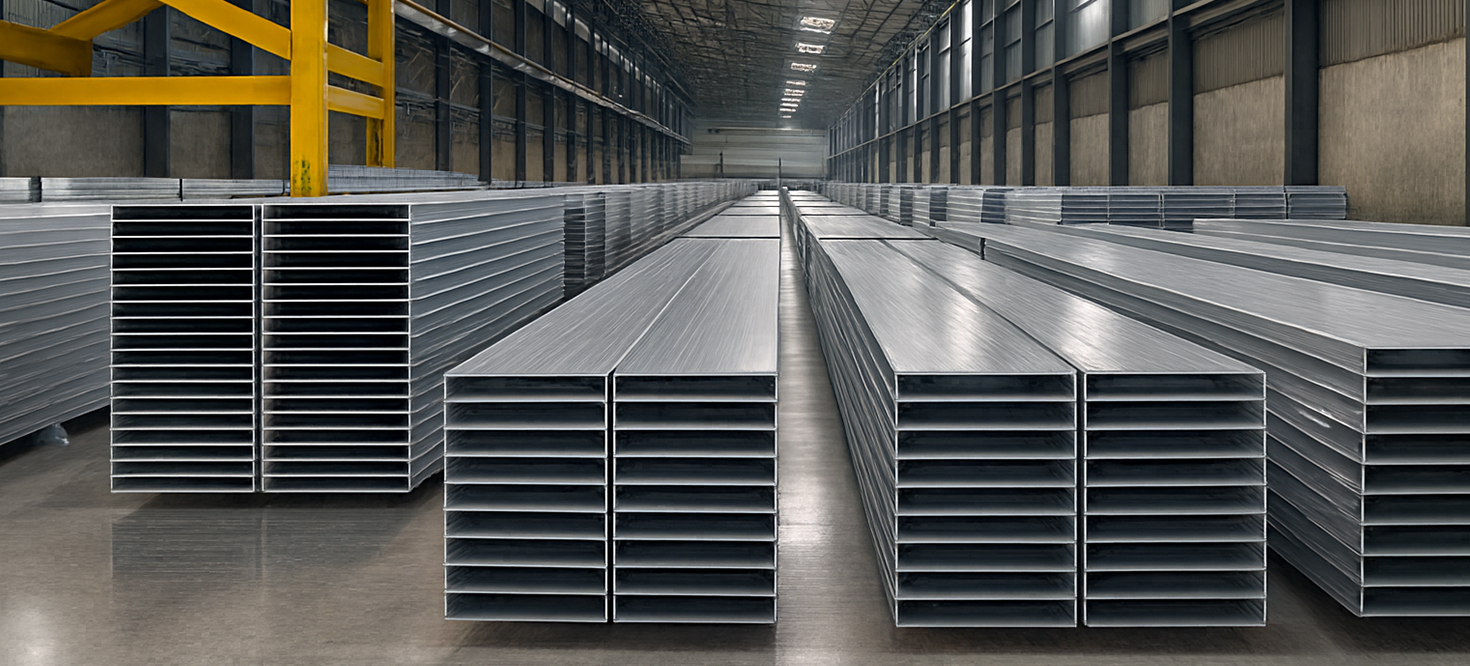
A 600 mm jointless aluminium formwork panel is a single-piece extruded aluminium panel, typically produced using high-capacity extrusion presses.
Key characteristics include:
- 600 mm continuous width
- Integrated ribs and stiffeners
- No welds or mechanical joints within the panel
- High dimensional stability
Unlike conventional systems that assemble multiple narrow sections, jointless panels function as monolithic structural units.
2. Why Joints Are the Biggest Bottleneck in Formwork Systems
The Hidden Cost of Multiple Connections
Every joint in a formwork system introduces:
- Alignment risk
- Additional fasteners
- Increased assembly time
- Potential leakage paths for concrete slurry
In repetitive construction cycles, these issues compound rapidly, leading to:
- Slower floor cycles
- Higher labor dependency
- Inconsistent concrete finish
- Increased wear and tear
Eliminating joints removes these bottlenecks at the root.
3. Structural Advantages of Jointless Panels
Uniform Load Distribution and Higher Stability
Jointless aluminium formwork panels offer:
- Even load transfer across the entire panel
- Reduced stress concentration points
- Improved resistance to deflection
This results in:
- Better performance under fresh concrete pressure
- Predictable behavior across repeated cycles
- Improved safety margins on-site
From an engineering standpoint, fewer interfaces mean higher reliability.
4. Faster Floor Cycles and Higher Throughput
Time Savings That Multiply Across Floors
Construction speed is often measured in floor cycle days.
600 mm jointless panels help reduce cycle time by:
- Covering larger surface areas per panel
- Reducing the number of components to install
- Simplifying alignment and leveling
- Speeding up stripping and reinstallation
Even a reduction of half a day per floor can translate into weeks of savings on large high-rise projects.
5. Reduced Labor Dependency and Skill Sensitivity
Simplifying Site Operations
Jointless panels reduce reliance on highly skilled labor because:
- Fewer parts require assembly
- Less on-site decision-making is needed
- Installation steps are standardized
This is particularly valuable in markets facing:
- Skilled labor shortages
- Rising labor costs
- Tight project timelines
Standardization improves predictability and control.
6. Superior Concrete Finish and Dimensional Accuracy
Quality Gains Beyond Structure
Fewer joints result in:
- Minimal joint lines on concrete surfaces
- Better slab and wall flatness
- Reduced honeycombing and leakage
This leads to:
- Lower plastering and finishing costs
- Improved visual quality
- Better dimensional alignment for follow-on trades
The benefit continues well beyond the formwork stage.
7. Manufacturing Precision Behind Jointless Panels
Why Capability Matters
Producing 600 mm jointless aluminium panels requires:
- High-capacity extrusion presses
- Advanced die design
- Controlled billet quality
- Precision cooling and straightening systems
Not all extrusion facilities can deliver:
- Uniform thickness across wide sections
- Consistent mechanical properties
- Long-length dimensional accuracy
Panel performance on-site is a direct reflection of manufacturing capability.
8. Durability and Reuse Across Multiple Projects
Designed for Long-Term Value
Jointless aluminium panels offer:
- High reuse life
- Minimal deformation over cycles
- Resistance to corrosion and impact
They are ideal for:
- Mass housing developments
- Repetitive floor layouts
- Long-term contractor asset utilization
Over time, the cost per use drops significantly, improving project economics.
9. Safety Improvements on Construction Sites
Predictable Behavior Reduces Risk
Jointless panels enhance site safety by:
- Reducing manual handling complexity
- Lowering the risk of misassembly
- Maintaining consistent load behavior
Lighter weight compared to steel systems also:
- Reduces crane dependence
- Lowers manual strain injuries
Safety gains increasingly influence system selection decisions.
10. Integration with Modern Construction Methodologies
Supporting Systemized and Modular Construction
600 mm jointless panels align well with:
- System formwork approaches
- Modular and precast construction
- High-repetition project models
Their consistency enables:
- Faster planning
- Better sequencing
- Improved coordination across trades
This makes them suitable for both residential and infrastructure projects.
11. Sustainability and Resource Efficiency
Doing More with Fewer Components
Jointless aluminium panels support sustainability by:
- Reducing material overlap
- Minimizing fasteners and accessories
- Lowering waste generation
- Enabling recycling at end of life
Efficient systems reduce environmental impact without sacrificing performance.
12. What Developers and Contractors Expect in 2026
By 2026, formwork system selection is driven by:
- Floor cycle performance
- Panel durability and reuse life
- Ease of handling and assembly
- Manufacturing consistency
- Long-term cost efficiency
600 mm jointless aluminium formwork panels meet these expectations more effectively than traditional alternatives.
Conclusion: Jointless Panels Are Redefining Construction Benchmarks
600 mm jointless aluminium formwork panels represent a fundamental shift in how construction efficiency is achieved. By eliminating joints, simplifying systems, and leveraging advanced extrusion technology, they deliver faster timelines, better quality, and stronger economics.
As projects grow larger and margins tighter, construction efficiency is no longer optional. Jointless aluminium formwork panels are setting the new benchmark.
Related Posts


