
Aug 25 2026
/
Exhibition Insights: Key Aluminium Industry Learnings from Global Trade Events
Introduction: Trade Exhibitions Are Where the Industry Speaks Honestly
Global aluminium trade exhibitions are no longer just showcases of products and machinery. By 2026, they have become strategic intelligence platforms where manufacturers, buyers, technology providers, and policymakers openly signal where the industry is heading.
What matters most at these events is not only what is displayed on booths, but:
- What buyers ask repeatedly
- What technologies attract sustained attention
- What capabilities are assumed as standard
- What gaps are quietly noted
This blog distills key learnings from global aluminium trade events and explains how these insights are shaping manufacturing strategy, investment decisions, and buyer expectations worldwide.
1. Scale and Capability Are No Longer Differentiators, They Are Assumptions
Buyers Now Assume Large-Scale Capability
Across major aluminium exhibitions, one trend is clear:
Buyers assume scale.
Large extrusion presses, high annual capacity, and wide profile capability are no longer headline attractions. They are baseline expectations.
What this means:
- Press size alone no longer wins attention
- Capacity must be accompanied by proof of control
- Buyers quickly move past “what you have” to “how you operate it”
Exhibitions reveal that capability without maturity is invisible.
2. Buyers Ask Fewer Product Questions and More Process Questions
The Shift from What to How
At recent global events, buyer conversations increasingly focus on:
- Process stability
- Tolerance control at scale
- Die development timelines
- Quality consistency over long runs
- Delivery reliability under pressure
This signals a clear shift:
Buyers are less interested in individual profiles and more interested in system performance.
Manufacturers who can explain processes clearly gain trust faster.
3. Automation and AI Are Expected, Not Admired
“Do You Use AI?” Is No Longer a Question
Automation, AI-based monitoring, and digital systems rarely draw applause anymore. Instead, buyers ask:
- Where is AI applied?
- What problems has it solved?
- How stable is output because of it?
Exhibitions show that:
- Manual-heavy plants are quietly excluded
- Digitally mature plants are shortlisted quickly
- AI is viewed as a reliability enabler, not a technology trend
Silence around automation often signals absence.
4. Wide and Structural Profiles Dominate Technical Conversations
Architecture, Infrastructure, and Mobility Drive Demand
Across exhibitions, the most discussed profile categories include:
- Wide aluminium formwork panels
- Structural beams and platforms
- EV battery and chassis components
- Rail and transport sections
- Industrial machinery frames
These applications demand:
- High-capacity presses
- Precision die engineering
- Stable metallurgy
Standard architectural profiles receive attention only when linked to system-level performance.
5. Sustainability Conversations Have Become Technical, Not Promotional
Buyers Want Data, Not Declarations
At global trade events, sustainability discussions have matured.
Buyers now ask:
- Energy consumption per ton
- Scrap and yield ratios
- Recycled aluminium percentage
- Water reuse systems
- ESG reporting practices
Generic sustainability claims no longer resonate.
Measured performance does.
Exhibitions expose which manufacturers are ready for ESG-driven sourcing and which are not.
6. Delivery Reliability Is a Quiet but Decisive Topic
Behind Closed Doors, Timelines Matter Most
While booths highlight products, private buyer discussions often revolve around:
- Past delivery failures
- Lead time reliability
- Ability to handle urgent scale-ups
- Risk mitigation planning
Manufacturers with:
- Multiple extrusion lines
- Integrated billet and die operations
- Strong planning systems
are perceived as safer long-term partners.
Delivery credibility is often the final selection filter.
7. In-House Capabilities Attract More Trust Than Outsourcing
Vertical Integration Is Viewed as Risk Reduction
Exhibition conversations reveal strong buyer preference for manufacturers who control:
- Billet casting
- Die design and manufacturing
- Extrusion and finishing
- Quality inspection
Outsourced dependencies raise questions about:
- Lead time stability
- Confidentiality
- Long-term consistency
Vertical integration is increasingly seen as a supply chain resilience advantage.
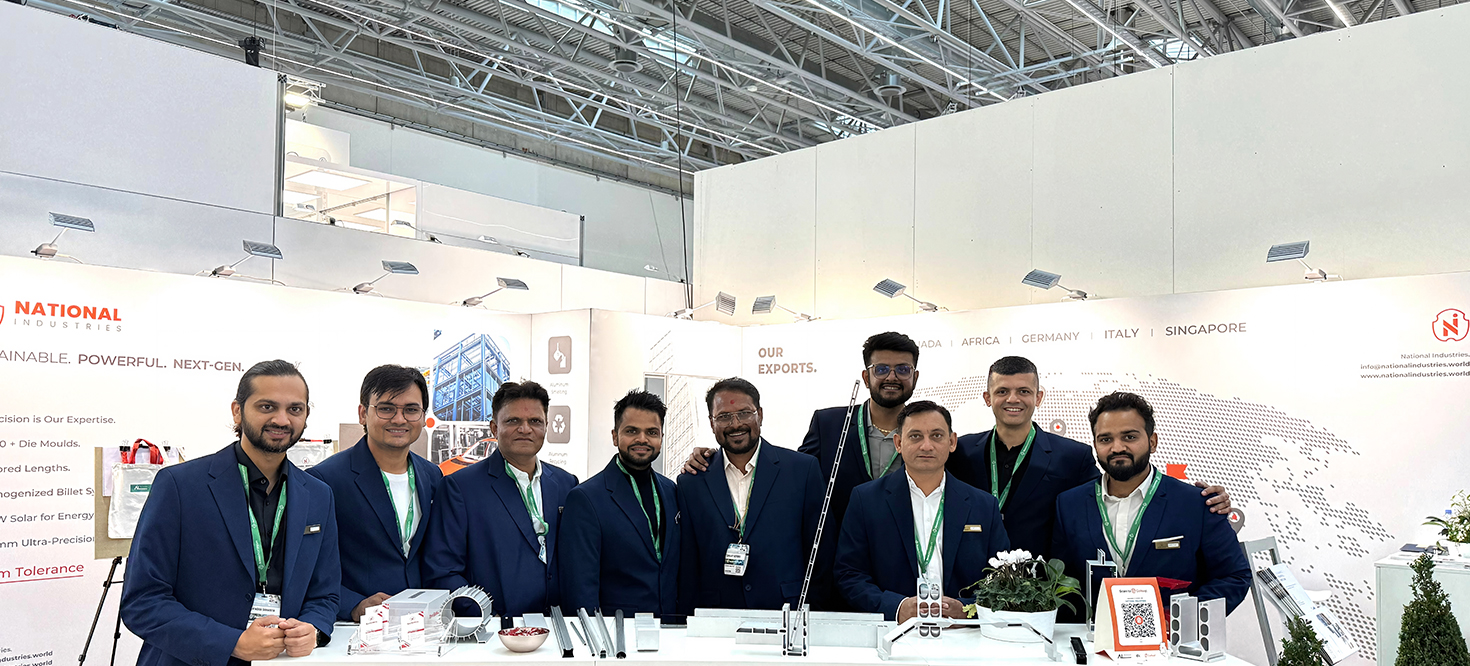
8. Engineering Teams Matter More Than Booth Design
Substance Outperforms Showmanship
Buyers gravitate toward booths where:
- Engineers can explain decisions
- Process trade-offs are discussed honestly
- Limitations are acknowledged clearly
Well-designed booths attract attention.
Well-prepared technical teams close conversations.
Exhibitions reinforce that credibility is built through competence, not visuals.
9. India’s Perception Is Shifting Rapidly
From Cost Source to Capability Partner
Global exhibitions reveal a notable change in perception toward Indian aluminium manufacturers.
India is increasingly seen as:
- Capable of wide and heavy extrusions
- Competitive in precision manufacturing
- Reliable for export-scale programs
The conversation has moved from “Can you do this?” to “How soon can you scale this?”
This shift opens doors to higher-value, long-term programs.
10. Buyers Are Comparing Systems, Not Suppliers
Evaluation Is Becoming Holistic
At exhibitions, buyers mentally compare:
- Manufacturing systems
- Decision-making maturity
- Response quality
- Long-term alignment
They are not looking for the “best extruder” but for the lowest-risk partner.
Manufacturers who communicate system thinking stand out clearly.
11. What Exhibitions Reveal That Reports Don’t
Real Concerns Surface Face-to-Face
Trade events expose:
- Hidden buyer frustrations
- Repeated pain points
- Emerging requirements before they are documented
- Early signals of regulatory or design shifts
Exhibitions act as early warning systems for industry change.
12. How Manufacturers Should Use Exhibition Insights
Smart manufacturers use exhibitions to:
- Validate investment decisions
- Identify capability gaps
- Refine positioning and messaging
- Train teams on buyer language
- Align strategy with real demand
Listening often matters more than presenting.
Conclusion: Exhibitions Are Mirrors of the Industry’s Direction
Global aluminium trade exhibitions reflect the industry’s true priorities. They show what is assumed, what is questioned, and what is no longer acceptable.
By 2026, exhibitions clearly signal that:
- Scale must be stable
- Precision must be repeatable
- Sustainability must be measurable
- Delivery must be reliable
Manufacturers who read these signals correctly stay relevant. Those who don’t fall behind quietly.
Related Posts


